Sleep-Away Fencing Camp FAQ
Train with Olympians, Ivy League coaches, and nationally ranked athletes at St. Mark's School — everything families need to know about sessions, dorms, training, meals, and registration.
Frequently Asked Questions
Why College Coaches & Olympians? (New here? Start here)
It's the premier sleep-away fencing camp in the country — a week where athletes train with Ivy League coaches, Olympians, and nationally ranked fencers on the beautiful St. Mark's School campus in Massachusetts. What makes it special:
- The strongest coaching lineup anywhere: 5+ Olympic & National Team coaches, 5+ college coaches, and 10+ Olympians from across the country.
- A direct line to the college process: recruiting and NCAA-pathway seminars led by Harvard Head Coach Daria Schneider and varsity fencers — with 30+ Ivy League placements among camp alumni over the past five years.
- World-class facilities: 40+ metal strips and fully air-conditioned dorms and training halls.
- Real competition and growth: 2–3 daily practices, a Camp Tournament, performance and data-analytics sessions, and Olympian mentorship.
- More than training: campers build independence, confidence, and lifelong friendships in a supportive environment.
Whether you're sharpening technique, chasing a competitive edge, or exploring the college fencing path, this camp surrounds your athlete with elite coaching and inspiring role models. Browse the questions below for the details.
What ages can attend?
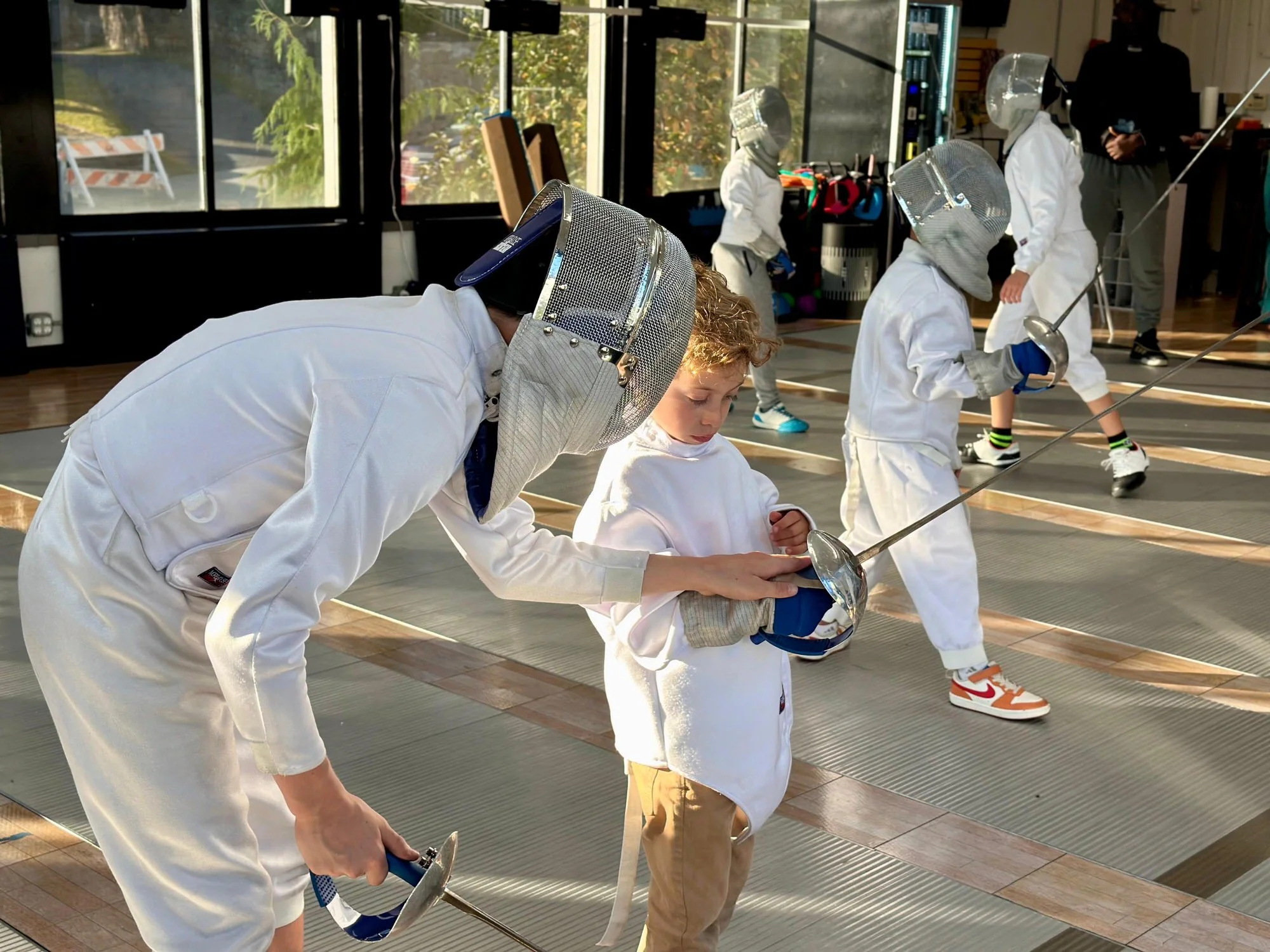
The camp serves youth through senior-level fencers in all three weapons. Age groupings include Youth (8–9, 10–11), Young Teen (12–13), and Cadet/Junior/Senior divisions. Campers must be at least 12 by January 1, 2026 to stay in the dorms, and at least 8 by January 1, 2026 to attend as a commuter. Younger athletes are welcome as commuters, and there are affordable hotels near campus.
What's the difference between a residential and a commuter camper?
Residential campers live on campus in supervised, air-conditioned dorms and receive three meals per day. Commuter campers arrive after breakfast (around 9:00 AM) and can stay through lunch and dinner or be picked up before the final session — pickup is available before dinner (about 5:00–5:30 PM) or after the third practice (about 8:30–9:00 PM). Commuters follow the same schedule and activities; they simply sleep off-campus.
What weapons are offered each session?
Session 1 (Aug 2–9) covers all three weapons: saber, foil, and epee. Session 2 (Aug 9–16) is saber only, offering intensive pre-season preparation for dedicated saber fencers.
Is this camp only for elite fencers?
No. While the coaching staff is world-class, the camp has groupings for elite, competitive, and intermediate fencers — including dedicated youth programming (ages 8–9, 10–11, and Young Teen 12–13) alongside Cadet, Junior, and Senior divisions.
Who runs the camp?
The camp is led by Co-Camp Directors Daria Schneider and Tim Morehouse. Daria is the Head Coach of Harvard University's fencing team, a former U.S. National Team saber fencer, and a former U.S. Olympic Team Captain. Tim is a three-time Olympian, Olympic Silver Medalist, and founder of Tim Morehouse Fencing Club, with a Master's in Education and years of teaching and coaching experience. Both are ACA-certified, accredited camp directors.
What are the facilities like?
Camp is held on the St. Mark's School campus in Southborough, MA, where athletes train on over 40 metal strips. Both the dorms and the main fencing hall are fully air-conditioned, and the main hall features sport court flooring with extra cushioning beneath the strips. A campus tour video and the school's website are linked on the camp page.
Is the camp accredited?
Yes. The camp is fully accredited by the American Camp Association (ACA). Both Camp Directors — Tim Morehouse and Harvard Head Coach Daria Schneider — are ACA-certified camp directors, and all coaches and staff are SafeSport certified, CPR trained, and certified in concussion protocols, ensuring the highest standards of safety and care.
Who supervises campers in the dorms?
The dorms are supervised by a team of trained counselors, including members of the Harvard and Columbia University fencing teams and other college athletes, along with participants in TMFC's Fencing Corps leadership program. Coaching and administrative staff also stay in the dorms to provide around-the-clock support and guidance.
What's included in tuition?
Tuition includes meals (three per day for residential campers, two for commuters), supervised air-conditioned dorm housing for residential campers, fully air-conditioned training facilities, full training days with 2–3 daily fencing practices plus cross-training and performance sessions, and a Camp Tournament. Private lessons and small-group training are available at additional cost.
What does a typical day look like?
Campers take part in three practices each day — two focused on fencing (footwork, drills, tactics, and strategy) and one on cross-training and performance — with evening sessions devoted to bouting for real competitive experience. Days are structured but not identical; timing and activities vary with the campus schedule, guest coaches, and training priorities, and campers also enjoy evening social activities and flex time. A detailed daily schedule is shared before camp.
How do the training groups work?
Initial placement is informed by the Day-One 5-Touch seeding tournament, which lets coaches evaluate skill levels and place athletes in the right groups. Mini-group tournaments and evaluations throughout the week let students move up. There are dedicated groups for youth (8–9, 10–11) and Young Teens (12–13), plus Cadet/Junior/Senior divisions. Placement does not limit who you fence — open-bouting sessions, including dedicated evening sessions, let athletes fence across all ages and levels.
What enrichment activities are offered?
Beyond fencing, campers take part in a range of enrichment programming:
- College recruiting and NCAA-pathway seminars led by Harvard Head Coach Daria Schneider, Harvard varsity fencers, and coaches from Columbia and Princeton
- Sports performance workshops focused on mental and physical preparation
- Inspirational talks from Olympians
- Saber data-analytics and performance-analysis sessions with Tim Morehouse, Director of Team USA Men's Saber
- Swimming (1–2 times per week), team-building games, and special surprises
A Referee Training Seminar led by two-time Olympic Team Captain Jeff Bukantz — including the USA Fencing referee test — is available at additional cost.
Are the dorms air-conditioned?
Yes. Campers stay in newly built, fully air-conditioned dorms (opened in summer 2024). The main fencing hall is also air-conditioned and features sport court flooring with extra cushioning under the strips.
What should I know about the dorm rooms?
Most rooms are doubles, and beds are twin XL. Free laundry machines are on every floor (campers bring their own detergent). For summer 2026, room temperatures are set and locked at approximately 70°F by the school, so individual rooms cannot be adjusted — we recommend packing a small fan as a backup on hot days.
How are roommate assignments handled?
Most students are placed in double rooms, and we do our best to honor roommate preferences — please list as many as you can on your registration. When we can't match a request, we generally place students near their friends within the dorm. Students stay with their assigned weapon group, and rooms are grouped by gender, age, and weapon. Male and female siblings may not room together, and siblings with significant age gaps are generally placed in different rooms.
What should campers pack?
A general guide (a full packing list is shared before camp):
- Fencing equipment: knickers, white jacket, electric jacket, mask, underarm protector, multiple working body cords and head clips, and 3 working weapons in case of breakage; plus fencing shoes for the gym.
- Practice clothing: 2–3 sets of long athletic pants (no shorts for drills) plus plenty of t-shirts, socks, and underwear — campers sweat and often change more than once a day. We recommend 2 sets of fencing whites.
- Footwear: 2–3 pairs of sneakers/fencing shoes, plus shower sandals.
- Other: swimsuit(s), pajamas, sweatshirts for cool evenings, a full toiletry set and towels, and a small fan.
- Linens: bring your own or rent from the school for a weekly fee (specified on registration).
- Medications: must include physician paperwork and a completed Authorization to Administer Medication form.
Please label all belongings and leave valuables at home — the camp is not responsible for lost or stolen items.
What about meals and dietary restrictions?
All meals are served on campus. The caterer offers plenty of gluten-free, vegan, vegetarian, and dairy-free options, and does not serve peanuts or other nuts (individually packaged peanut butter is available). Kosher options are available, though the kitchen is not a certified Kosher kitchen.
Can campers bring snacks, and what about evening food?
Campers may bring their own non-perishable snacks (nothing requiring refrigeration, cooking, or heating, and no nuts/peanuts). Cooking devices such as microwaves and hot-water heaters are not permitted per school safety policy. A Camp Snack Store offers water, Gatorade, electrolyte drinks, protein and granola bars, fruit, and other healthy options. Outside delivery (such as UberEats) is not permitted; instead, optional evening food trucks follow the final practice (around 9:00 PM), with a different cuisine each night and vegetarian options every evening.
What is the cell phone and device policy?
To support a fully present, connected experience, personal cell phones, computers, and video-gaming devices are not permitted for campers under 18. This intentional policy — consistent with best practices at high-quality sleep-away camps — helps athletes immerse in training and recovery, build independence, and form meaningful connections. Any devices found by staff are held until the end of camp. There are no exemptions to the cell phone policy.
How can parents communicate with their camper and reach the camp?
In an emergency, parents can reach the Camp Director and staff at any time via a dedicated emergency number provided before camp. After the first two days, campers have supervised check-in call times using camp phones, and parents receive regular email updates and photos. The best way to reach the camp office is by email at info@timmorehousefencing.com, monitored daily from about 9 AM–7 PM; staff relay non-emergency messages and can arrange a call-back if needed.
Can parents visit or watch during camp?
To protect the camp environment, parents are not on-site during the week (commuter parents come only to the designated pickup areas). On the final morning of each session (Sunday, about 9:00–11:00 AM), parents are invited to watch the gold-medal matches and medal ceremony of the Camp Tournament and to hear closing remarks from Harvard Head Coach Daria Schneider and Tim Morehouse.
Are there academic device exemptions?
Campers who require a laptop for academic purposes (such as SAT preparation or mandatory coursework) may apply for an academic exemption. Approved devices may be used only during designated, supervised times, and an exemption request form is shared before camp. Please note: the academic exemption does not apply to cell phones.
How does check-in and arrival work?
Residential campers check in during an early-afternoon window on the first day of each session, with commuters arriving shortly after. Check-in takes place at the gym, where campers receive their dorm and room assignment and drop their fencing bag; staff then walk campers to the dorms. Per school policy, parents are not permitted in the dorms and say goodbye at the gym. The first meal is dinner, so campers should eat lunch beforehand. Exact arrival times and detailed instructions are shared before camp.
Are there hotels near campus?
Yes. Framingham, MA (about 15 minutes away) offers a range of hotels; the Westin in Waltham (about 30 minutes) is a higher-end option; and downtown Boston is about a 35–40 minute drive with many choices. These are popular with commuter families and those arriving the night before.
What if my camper can't attend every day of a session?
Because the school charges us by headcount, tuition is not pro-rated — you pay for the full session even if your camper can't attend every day. You may arrive later or leave earlier; please note this on your registration form so we can plan accordingly.
What is the refund policy?
A $750 deposit applies if you request a refund before June 1 (the deposit is deducted from your refund). Between June 1 and July 15, a 50% refund of tuition is available. After July 15, no refunds are issued, as full payment will have been made to the school for all registered campers. Once a camper attends any portion of camp, tuition is non-refundable and non-transferable — this applies in all cases, including illness, injury, code-of-conduct violations, or any other circumstance. There are no exchanges or credits.
Can I attend both sessions?
Absolutely. Many athletes attend both weeks. Register for each session separately. Contact info@timmorehousefencing.com for multi-session pricing inquiries.
No matching questions — try different keywords, or email info@timmorehousefencing.com.
Still have questions? Email info@timmorehousefencing.com
Register Now →