
Fencing Develops More Than Athletes: How the Sport Builds Confidence, Focus, and Lifelong Skills
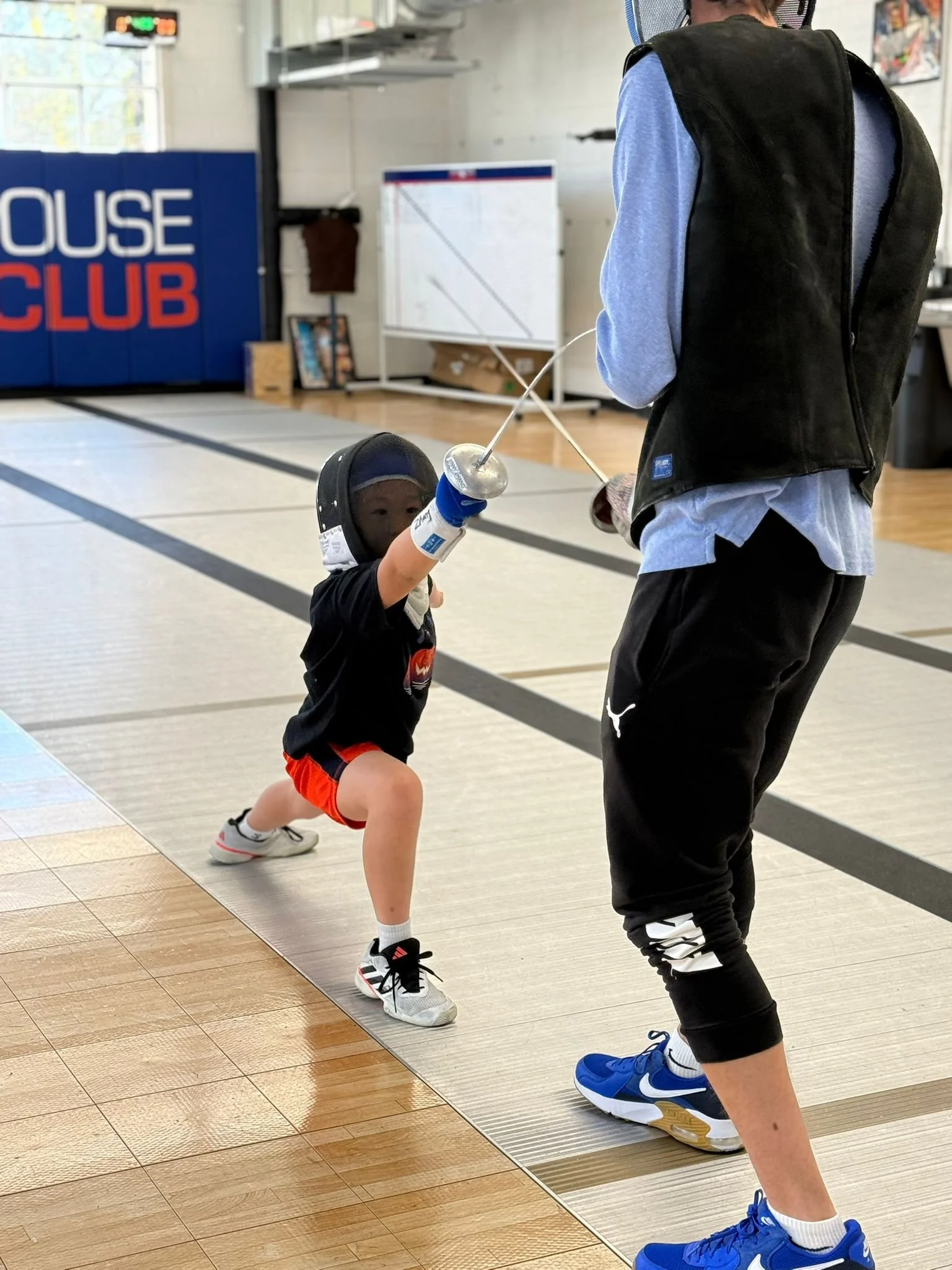
Fencing builds coordination, focus, confidence, and decision-making—starting from the very first lessons.
More Than a Sport
Fencing develops far more than athletic ability. As a fast-paced, highly cognitive sport, fencing builds confidence, focus, resilience, and decision-making while also supporting physical coordination and emotional regulation. At Tim Morehouse Fencing Club, we use fencing to help children grow as athletes, thinkers, and people—supporting many pathways while holding every student to a standard of effort, quality, and purposeful training.
When most parents think about youth sports, they think about fitness, teamwork, and fun. Those things matter—but some sports go further. Fencing is one of them.
What Research Says About Fencing and Brain Development
Fencing is widely recognized as one of the most cognitively demanding sports. Studies examining fencing and other open-skill sports—where athletes must continuously adapt to changing situations—have linked participation to improvements in:
Attention and focus
Reaction time and processing speed
Working memory and executive function
Decision-making under pressure
Notably, fencing is one of the few sports studied in older adults, where research has shown that long-term participation is associated with maintaining cognitive performance and mental sharpness later in life. This highlights how deeply the sport engages the brain across the lifespan.
For children and adolescents, these same demands support the development of skills that are closely tied to academic learning, emotional regulation, and problem-solving.
A Sport That Trains the Mind and Body Together
Fencing is an open-skill sport, meaning athletes must constantly adapt to changing situations rather than repeat fixed patterns. Every exchange requires:
Reading an opponent
Anticipating intent
Making rapid decisions
Executing precise movements under pressure
Unlike many sports where play flows continuously, fencing compresses decision-making into intense, high-focus moments. Athletes must think, act, and adjust in seconds.
This combination of physical execution and cognitive demand is what makes fencing uniquely powerful for development—especially in children and adolescents.
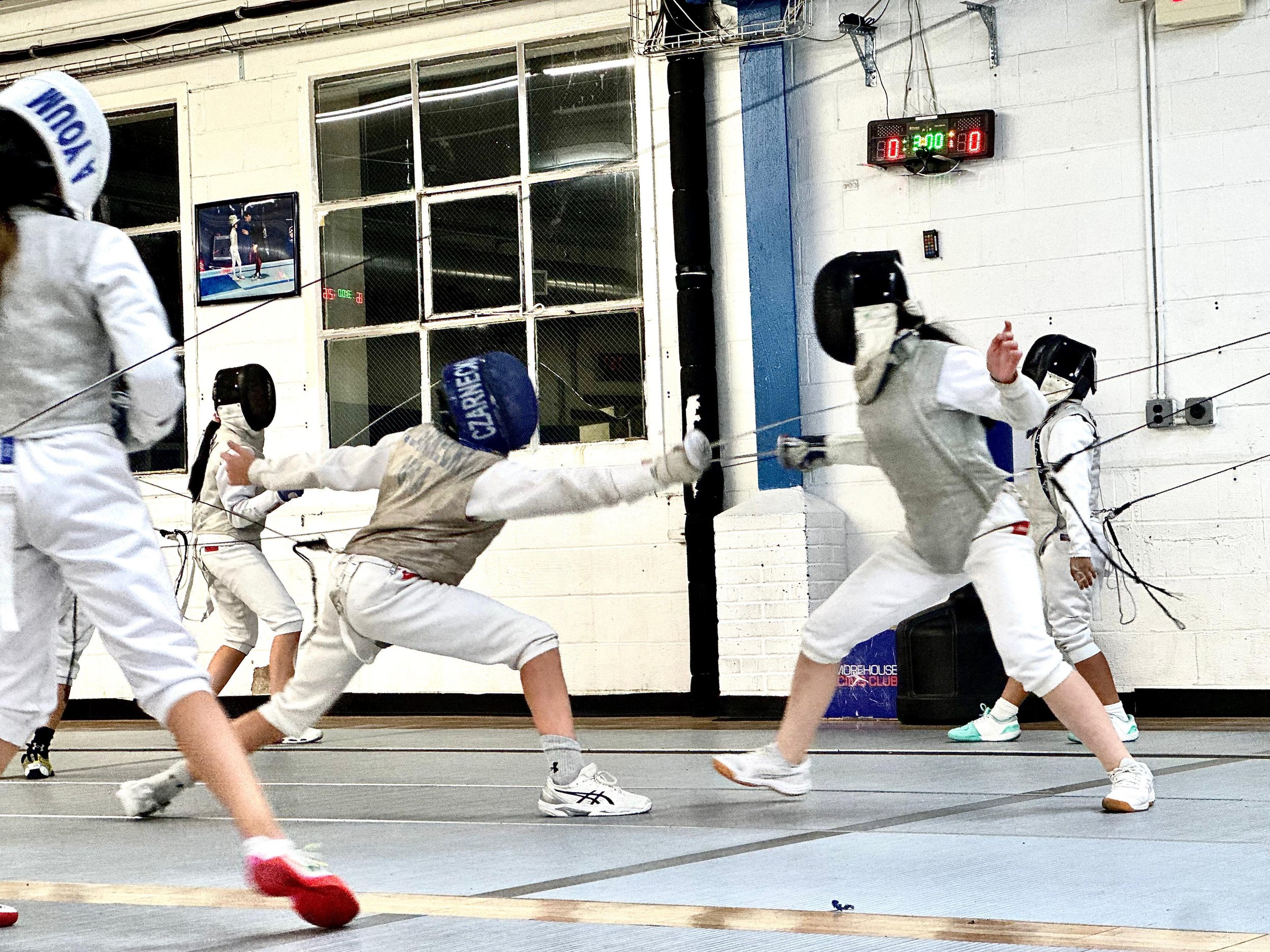
Confidence and Resilience Through Real Feedback
Fencing offers immediate, honest feedback. You either score the touch or you don’t—and then you reset and go again.
Over time, athletes learn:
How to handle mistakes without spiraling
How to adapt after failure
How to stay composed under pressure
This builds resilience grounded in experience, not encouragement alone. Confidence in fencing comes from learning that setbacks are part of progress—and that effort, reflection, and adjustment lead to improvement.
These lessons translate directly to school, relationships, and future challenges.
Focus, Attention, and Executive Function
Fencing demands sustained concentration and impulse control. Athletes must manage timing, distance, and tactics while ignoring distractions—internal and external.
Research on fencing and similar cognitively demanding sports has linked participation to improvements in:
Attention and focus
Reaction time
Working memory
Planning and adaptability
Interestingly, fencing is one of the few sports studied in older adults, where it has been associated with maintaining cognitive function later in life. That longevity underscores how deeply the sport engages the brain.
For young athletes, this means fencing supports the same mental skills needed for learning, organization, and problem-solving in academic settings.
Emotional Regulation Under Pressure
Few youth activities teach emotional control as clearly as fencing.
Athletes must learn to:
Compete one-on-one
Handle nerves and frustration
Reset quickly after a loss or mistake
At TMFC, coaches actively guide athletes through this process—helping them develop composure, self-awareness, and emotional discipline. These skills are not automatic; they are learned through structured practice and reflection.
Over time, students become better at managing stress and responding thoughtfully rather than reactively.
Athletic Development Without Burnout
Physically, fencing develops:
Speed and agility
Balance and coordination
Posture and body control
Because fencing emphasizes technique, timing, and efficiency over size or brute force, it is a low-impact sport that supports long-term athletic development. Many athletes fence successfully into adulthood, making it a sustainable activity rather than one children “age out of.”
This longevity is particularly appealing for families looking for a sport that grows with their child rather than overwhelming them early.
Multiple Pathways, One Standard: Effort and Quality
One of the strengths of fencing is that it supports many definitions of success.
Some students fence for confidence, fitness, and enjoyment. Others pursue competition, national events, or college recruitment. At TMFC, we support all of these paths.
What remains constant is our emphasis on:
Best effort
Coachability
High-quality training
We don’t push outcomes—but we do believe that how you train matters. When athletes show up consistently, engage thoughtfully, and take pride in their work, progress follows—regardless of the level they ultimately choose.
Leadership, Discipline, and Long-Term Growth
Fencing naturally reinforces habits that serve students beyond sport:
Goal setting and reflection
Time management
Accountability for preparation and performance
These skills are developed gradually, through routine, structure, and guidance. For many families, this is where fencing’s value becomes most apparent—not in medals, but in maturity.
Want to see how fencing fits into your child’s development?
Learn how families get started at Tim Morehouse Fencing Club →
